
Regional Intelligence
Where in Ghana Should a Consumer-Facing Business Launch? A Regional Opportunity Scorecard
A 16-region scorecard ranking Ghana's administrative regions by market demand, purchasing power, and cost pressure. Greater Accra is the strongest first-entry market, Ashanti the strongest scale region, and Central the leading third-tier opportunity — using sub-national population projections and regional CPI/inflation by spending category that sits beneath the national averages most tools report.
Where a consumer business launches in Ghana shapes its demand base, cost structure, and growth ceiling. This report builds a regional opportunity scorecard across all 16 regions using projected 2030 population, regional consumer price levels, and category-level inflation.
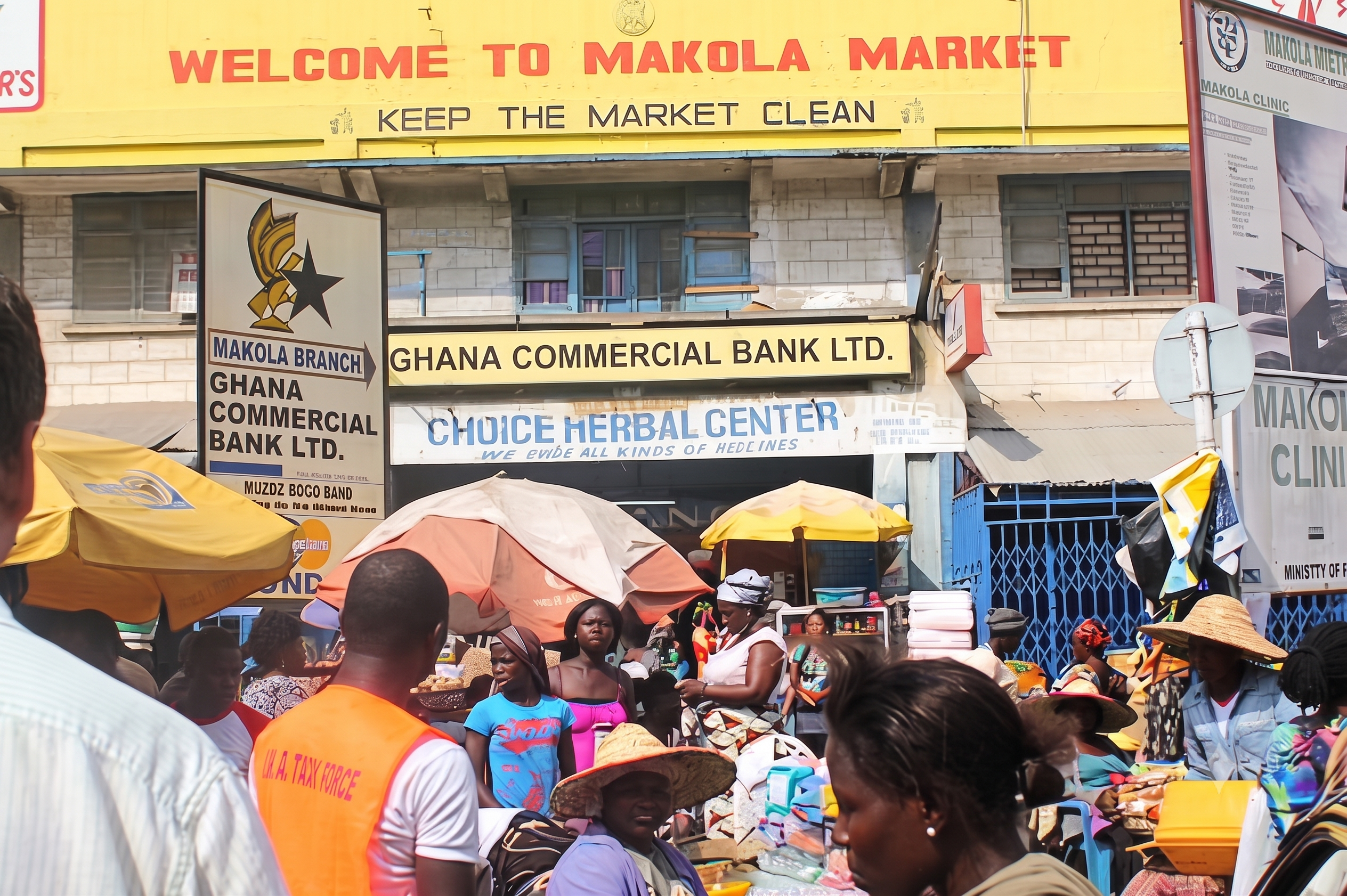
Where a Consumer-Facing Business Should Launch in Ghana: A Regional Opportunity Scorecard
Market size points to Greater Accra and Ashanti; the decisive differentiator is how each region balances demand depth against consumer price pressure and operating-cost strain.
Published: 2026-06-07 | Kanari Intelligence
Executive Summary
The decision on where to launch a consumer-facing business in Ghana depends on the alignment of market size, growth, consumer affordability, and operating-cost pressure. On these factors, Greater Accra is the strongest launch region and Ashanti the clear second. Below them sits a second tier of large but costlier markets — Northern, the largest interior market, ranks third on demand, while Central is the natural southern-corridor extension of Accra — both better suited to phased expansion than a first launch.[2][3]
On a demand-weighted opportunity score (the appropriate lens for a consumer launch, where market size is the binding constraint), Greater Accra leads at 0.75 and Ashanti follows at 0.67, well ahead of the next tier — Northern (0.49) and Central (0.44). The full methodology, weighting variants, and all 16 regions are set out in Section 3.3. Greater Accra and Ashanti hold the top two positions under any demand-aware weighting; only a pure cost lens — which ignores market size — promotes small, low-cost regions, which is exactly why size must anchor the ranking.[1]
Greater Accra and Ashanti offer the deepest consumer pools and the strongest commercial clustering, but also face high housing, transport, and general price pressures.[2][1][4] Northern scores third on demand as Ghana’s largest interior market, though high transport and housing costs weigh on it. Central, fourth on the raw score, remains strategically attractive: it combines a meaningful consumer base, proximity to the southern commercial corridor, and logistics and industrial-policy spillovers, while being less saturated than Accra and Kumasi.[3][2]
Key findings:
- Greater Accra ranks first on the demand-weighted opportunity score (0.75), ahead of Ashanti (0.67); a clear gap then separates the two leaders from the next tier — Northern (0.49) and Central (0.44).[1]
- Greater Accra is projected to be the largest regional market by 2030 at about 6.96 million people, ahead of Ashanti at 6.13 million; Central (3.54 m) and Eastern (3.23 m) follow.[2]
- Greater Accra’s 2021–2030 population growth is about 27%, the fastest of the two largest regions, versus Ashanti’s 13% and Eastern’s 10% (smaller interior regions such as Northern grow faster in percentage terms from much smaller bases).[2]
- Across regions, the latest all-items CPI ranges from 234.3 (Oti) to 305.5 (Eastern) — about a 30% gap (1.30:1). Because the indices are rebased to 2021 = 100, this reflects uneven inflation since 2021 rather than absolute price levels.[1]
- Food CPI is highest in North East at 384.7, Eastern at 371.3, and Upper West at 359.6, showing severe food affordability pressure in several non-core regions.[1]
- Housing and utilities CPI is highest in Central at 392.6 and Greater Accra at 385.2, indicating major launch constraints in these regions.[1][4]
- Transport CPI is highest in Oti at 264.7, Upper West at 260.0, and Northern at 252.1, signaling higher distribution friction outside the main southern urban belt.[1][4]
- Greater Accra and Ashanti lead under every demand-aware weighting. The order is not invariant overall — under a pure cost lens, small low-cost regions (Oti, Ahafo, Bono East) climb — which confirms that for a consumer launch the market-size anchor is decisive, not incidental.[1]
1. The Strategic Logic of Regional Launch Choice
Consumer-facing firms tend to cluster where there is a large and growing customer base, sufficient purchasing power, and logistics or network advantages that offset higher costs.[5][3][1] In Ghana, Greater Accra and Kumasi are the dominant urban-commercial centers, attracting migration and retail concentration.[4] Inflation and local price levels are as important as population: high food, transport, and housing inflation erode household purchasing power and raise operating costs.[6][7][1][4]
Ghana’s regional price data are robust, based on extensive collection by the Ghana Statistical Service from over 7,700 outlets using international COICOP categories.[8]
Conclusion: The optimal launch region is where scale, affordability, and operating conditions combine most favorably. In Ghana, this points to the southern urban-commercial corridor over lower-cost but less scalable regions.[2][3][1]
2. Ghana’s Regional Market Structure Since 2015
2.1 Urban concentration and migration
Ghana’s market geography is increasingly concentrated around urban centers. Greater Accra and Ashanti have absorbed large migration flows, reinforcing their roles as consumption and employment hubs.[4] Migration enlarges urban demand pools but also intensifies congestion and price pressures.[4]
Conclusion: Accra and Kumasi’s commercial dominance is increasing. Launching outside these regions requires a distinct cost or corridor advantage.[4]
2.2 Inflation shock and cost pressure
From 2020 to 2023, Ghana experienced high inflation and exchange-rate shocks, raising business costs and weakening household incomes.[6] Regional inflation since 2021 has been uneven: at the latest reading the highest regional all-items index is about 1.3 times the lowest.[1]
Conclusion: Regional cost environments are uneven. Pricing and affordability strategies must be tailored by region.[1][6]
2.3 Infrastructure and commercial clustering
Public investment has strengthened the southern and middle-belt commercial corridor. Greater Accra has benefited from Tema Port expansion, Ashanti from the Boankra Inland Logistics Terminal, and Central, Eastern, and Ahafo from feeder-road upgrades.[2][6][7][8] Industrial clustering is concentrated in Ashanti, Greater Accra, and Central.[9]
Conclusion: Infrastructure advantages reinforce the attractiveness of regions already strong in market demand.[6][8][9]
3. Empirical Results: Regional Demand, Prices, and the Opportunity Scorecard
3.1 Market demand: population size and growth to 2030
Figure 1. Regional Population Trends and Projections (2021–2050)
Source: Ghana Statistical Service
Greater Accra is projected to be Ghana’s largest regional market by 2030 at about 6.96 million people, ahead of Ashanti at 6.13 million — and it grows faster than its only peer at that scale, at about 27% over 2021–2030 versus Ashanti’s 13%. Central (3.54 million) and Eastern (3.23 million) form the next tier. Several smaller regions — North East, Savannah, Oti, and the interior Northern region — grow faster in percentage terms, but from much smaller bases.[2]
Conclusion: For consumer businesses, absolute market size is the key driver. Greater Accra and Ashanti remain the main launch candidates.[2]
3.2 Consumer price pressure: all-items and category-specific CPI
Figure 2. Regional Consumer Price Index (CPI) Levels in Ghana (2021–2026)
Source: Ghana Statistical Service
Across the 16 regions, the latest all-items CPI ranges from 234.3 (Oti) to 305.5 (Eastern) — a 1.30:1 spread, or about 30%. Because each regional index is rebased to 2021 = 100, this gap reflects how much more prices have risen since 2021 in some regions than in others, not the absolute cost of living. The cost dimension of the scorecard should therefore be read as relative price pressure, not an absolute price-level ranking.
Figure 3. Regional Food Consumer Price Index in Ghana (2021–2026)
Source: Ghana Statistical Service
Food CPI is highest in North East, Eastern, and Upper West. High food CPI signals constrained purchasing power for mass-market consumers.[1][6]
Figure 4. Regional Housing, Utilities and Fuel Consumer Price Index in Ghana (2021–2026)
Source: Ghana Statistical Service
Housing and utilities CPI is highest in Central and Greater Accra, indicating substantial operating-cost pressure in these regions.[1][4]
Figure 5. Regional Transport Consumer Price Index in Ghana (2021–2026)
Source: Ghana Statistical Service
Transport CPI is highest in Oti, Upper West, and Northern, suggesting higher distribution costs outside the main southern logistics corridor.[1][4]
Figure 6. Regional Health Consumer Price Index in Ghana (2021–2026)
Source: Ghana Statistical Service
Health CPI also varies across regions, with the highest in Eastern, Central, and Northern. While less directly relevant for most consumer-facing firms, this signals broader cost-of-living pressure.[1]
Conclusion: Ghana’s consumer affordability environment is highly regionalized. Greater Accra and Central are expensive for operations, while peripheral regions face higher food and transport costs.[1][4]
3.3 Opportunity scorecard and ranking
The scorecard converts five Ghana Statistical Service indicators into one comparable opportunity score for every region. It is fully reproducible — the exact steps are below.
How the scorecard is built
Step 1 — Inputs (per region, from GSS data): (a) market size = projected 2030 population; (b) growth = 2021→2030 population change; (c) consumer affordability = latest regional food CPI; (d) operating-cost pressure = the average of latest regional housing-&-utilities CPI and transport CPI. CPI sub-indices proxy costs because direct regional wage and commercial-rent data are not published.[4]
Step 2 — Normalize: each indicator is min-max scaled to 0–1 across all 16 regions. The two cost indicators are inverted (1 − normalized value) so that a lower price level scores higher.
Step 3 — Sub-scores:
- Demand = 0.75 × size + 0.25 × growth. Size dominates because a consumer business needs a market before it needs cheap inputs.
- Cost environment = 0.5 × affordability + 0.5 × operating-cost.
Step 4 — Composite: three weightings are reported for transparency — equal-weight (0.5 / 0.5), demand-focused (0.7 / 0.3), and cost-focused (0.3 / 0.7). The headline ranking uses the demand-focused score, the correct lens for a consumer launch.
Worked example — Greater Accra: it has the largest 2030 population (≈6.96 m → size = 1.00) and strong growth among the large regions (≈27% → normalized growth ≈ 0.71), giving Demand = 0.75 × 1.00 + 0.25 × 0.71 = 0.93. But its food CPI (289) and housing-plus-transport CPI (≈302) are among the country’s highest, so its inverted cost-environment score is only 0.33. Its demand-focused composite is therefore 0.7 × 0.93 + 0.3 × 0.33 = 0.75.
Table 2. Ghana regional opportunity scorecard — all 16 regions (ranked by demand-focused score)
| Rank | Region | 2030 pop. (m) | Demand | Cost env. | Equal-wt | Demand-focused | Cost-focused | Assessment |
|---|---|---|---|---|---|---|---|---|
| 1 | Greater Accra | 6.96 | 0.93 | 0.33 | 0.63 | 0.75 | 0.51 | Best launch market — deepest demand, highest costs |
| 2 | Ashanti | 6.13 | 0.67 | 0.67 | 0.67 | 0.67 | 0.67 | Natural second launch — large and cost-balanced |
| 3 | Northern | 3.11 | 0.54 | 0.36 | 0.45 | 0.49 | 0.42 | Largest interior market; fast growth, high cost pressure |
| 4 | Central | 3.54 | 0.48 | 0.34 | 0.41 | 0.44 | 0.38 | Southern-corridor extension of Accra; meaningful base, high housing cost |
| 5 | Bono East | 1.51 | 0.26 | 0.75 | 0.51 | 0.41 | 0.60 | Low-cost mid-belt; thin demand |
| 6 | Western | 2.47 | 0.32 | 0.52 | 0.42 | 0.38 | 0.46 | Moderate on both scale and cost |
| 7 | Bono | 1.51 | 0.25 | 0.70 | 0.47 | 0.38 | 0.56 | Affordable; limited scale |
| 8 | Upper East | 1.57 | 0.21 | 0.70 | 0.46 | 0.36 | 0.55 | Cheap to operate but small |
| 9 | Oti | 0.86 | 0.08 | 1.00 | 0.54 | 0.35 | 0.72 | Cheapest operating environment, smallest market |
| 10 | Volta | 1.84 | 0.15 | 0.77 | 0.46 | 0.34 | 0.59 | Low cost, modest market |
| 11 | North East | 0.86 | 0.24 | 0.49 | 0.36 | 0.31 | 0.41 | Fast growth, small base, high food prices |
| 12 | Western North | 1.06 | 0.15 | 0.67 | 0.41 | 0.31 | 0.52 | Low cost, thin scale |
| 13 | Savannah | 0.84 | 0.22 | 0.49 | 0.35 | 0.30 | 0.41 | Small high-growth frontier |
| 14 | Eastern | 3.23 | 0.31 | 0.26 | 0.28 | 0.29 | 0.27 | Sizeable but high price pressure and slow growth |
| 15 | Ahafo | 0.65 | 0.05 | 0.81 | 0.43 | 0.28 | 0.58 | Smallest market; low cost |
| 16 | Upper West | 1.11 | 0.19 | 0.19 | 0.19 | 0.19 | 0.19 | Weak on both demand and cost |
All scores are 0–1. Source: KANA AI analysis of Ghana Statistical Service regional population projections and regional CPI sub-indices. [1]
What the weightings reveal. Greater Accra and Ashanti lead under any demand-aware weighting. The ranking is not invariant overall: under a pure cost lens, small low-cost regions (Oti, Ahafo, Bono East) climb sharply because they are cheap — but they lack the consumer base to anchor a launch. That sensitivity is the point. For a consumer-facing business, market size is the binding constraint, so the demand-focused score is the decision-relevant ranking, and on it the order is clear: Greater Accra, then Ashanti, then a second tier of large interior/corridor markets (Northern, Central).
Source: [3]
Conclusion: Greater Accra and Ashanti are the unambiguous top two for a consumer launch, separated by a clear gap from the rest. The second-tier choice — Northern’s interior scale versus Central’s southern-corridor logistics — is a strategy decision, not a close-call on a single score.[3]
3.4 Why the top three regions win
Table 3. Best-fit business models for the top three launch regions
| Region | Why it ranks highly | Main constraints | Best-suited business types |
|---|---|---|---|
| Greater Accra | Deep consumer base, fastest growth among top markets, strongest logistics and digital ecosystem | High housing/utilities costs, intense competition, urban congestion | Omnichannel retail, quick-service food, pharmacy chains, beauty/personal care, fintech-enabled consumer services |
| Ashanti | Largest projected population, strong inland distribution role, major urban hub around Kumasi | Rising cost pressure, less international gateway access than Accra | Mid-market retail chains, household goods, education services, healthcare retail, warehousing-linked distribution |
| Central | Strong corridor position, industrial spillovers, meaningful demand at lower saturation | High housing/utilities CPI, smaller market than top two | Value retail, food processing and distribution, commuter-town services, family-oriented consumer brands |
Greater Accra combines a projected 6.96 million people by 2030 with the fastest growth among the top markets and the strongest logistics ecosystem. Ashanti is the largest regional market and the natural inland distribution hub. Central benefits from corridor access and industrial clustering while offering a less crowded market.[2][6][7][8][9]
Conclusion: The top three regions each offer distinct advantages for different business models.[2][3][6]
4. Forward-Looking Assessment
Over the next five years, the current regional hierarchy is likely to persist. Greater Accra and Ashanti will remain above 6 million people by 2030. Logistics and industrial investment will continue to favor the southern and middle-belt corridor, and digital infrastructure improvements will reduce market-entry friction in urban and peri-urban areas.[2][6][8][9][10]
The main uncertainty is affordability. If regional inflation in food, transport, and housing remains uneven, businesses targeting lower-income consumers will need to adjust pricing and product formats accordingly.[1][6]
Conclusion: The core regional structure is unlikely to change by 2030. The practical question is whether firms can enter the top regions with an appropriate cost model and channel mix.[2][6][10]
5. Policy Implications
For Government
Government should prioritize corridor-based regional market development. This includes reducing operating-cost pressures in Greater Accra and Central, lowering transport friction in Oti, Upper West, and Northern, and publishing more granular business-cost data at the regional level.[1][4][6][8][9]
For Investors
Investors should sequence market entry: Greater Accra for premium scale, Ashanti for inland expansion, and Central for corridor adjacency and lower saturation. For lower-income segments, focus on price-pack architecture and efficient distribution. Strong brands and digital capability can justify Greater Accra’s higher costs due to superior sales density and logistics.[2][3][1][6][6][10]
For Development Partners
Development partners should target regions where cost pressures hinder market participation, supporting feeder roads, cold-chain logistics, market digitization, and urban service delivery. Improved data infrastructure on regional wages, rents, utilities, and firm formation would enhance private investment and policy decisions.[4]
Data Sources and Methodology
This report uses official regional population projections and regional Consumer Price Index data — all items, food, housing/utilities/fuels, transport, and health — from the Ghana Statistical Service.[1] Market-structure, infrastructure, and demand context draws on commercial market analyses and peer-reviewed studies of Ghanaian consumer demand and food-price transmission.[2][3][6][8][9]
The quantitative framework is a regional opportunity scorecard. It combines:
- Market demand: regional population size and projected growth to 2030.[2]
- Consumer purchasing-power pressure: regional all-items CPI and category CPI, especially food.[1]
- Operating-cost pressure: CPI proxies for housing/utilities/fuels and transport, supported by qualitative infrastructure evidence.[1][4][6][8]
The exact normalization, sub-score weights, and worked example are set out in Section 3.3. Three weighting schemes are reported — equal-weighted (0.5/0.5), demand-focused (0.7/0.3), and cost-focused (0.3/0.7) — and the demand-focused score anchors the ranking, because for a consumer launch market size is the binding constraint. Greater Accra and Ashanti hold the top two positions under any demand-aware weighting; the order below them does shift, and under a pure cost lens small low-cost regions rise — a deliberate sensitivity that underlines why size must anchor the decision.[3][1]
Limitations
Direct regional business-cost data (commercial rents, wages, electricity tariffs) are not published; CPI sub-indices are used as proxies for operating-cost pressure.[4] Regional year-on-year inflation by category is not available in a complete panel, so comparisons focus on price levels rather than inflation rates.[1] The scorecard is a ranking framework and does not forecast firm revenue or profit. It highlights where launch conditions are strongest but does not replace detailed site selection or competitor analysis.[3][6]
The main conclusion is robust: launch first in Greater Accra, expand into Ashanti, then move into the second tier — Central as the southern-corridor platform and Northern as the largest interior market — for the next phase of consumer growth in Ghana.[2][3][6]
References
-
Consumer Price Index and regional population projections — Ghana Statistical Service [link]
-
Ghana’s Market Landscape: Trends, Forces, and Opportunities for 2026 — ModernGhana [link]
-
Ghana Market Analysis — Fitch Solutions (BMI) [link]
-
Ghana Economy: GDP, Inflation, CPI & Interest Rates — FocusEconomics [link]
-
Ghana — Country Commercial Guide: Market Overview — U.S. Department of Commerce [link]
-
Market Integration and Price Transmission in Food and Cash-Crop Markets of Developing Countries — FAO [link]
-
Towards a Demand Aggregation Theory of Marketing in Emerging Markets: Evidence from Ghana — Springer [link]
-
Food Demand Characteristics in Ghana: A Quadratic Almost Ideal Demand System — Scientific African (ScienceDirect) [link]
-
Ghana Urbanisation and Housing Review — UN-Habitat [link]
-
Attitudes Toward Debt and Debt Behavior — Global Financial Literacy Excellence Center (GFLEC) [link]
Disclaimer. This report is produced by KANA AI for informational and educational purposes only. It does not constitute investment advice, a research recommendation, or an offer or solicitation to buy or sell any security, and it should not be the sole basis for any investment decision. Figures are computed from publicly available data and reported company fundamentals, which may be incomplete, delayed, or contain errors; valuation ratios reflect the latest available data and can lag fast-moving prices. Past performance is not indicative of future results. Readers should conduct their own due diligence and consult a licensed financial adviser. KANA AI accepts no liability for decisions taken on the basis of this report.
Next Step
Want to discuss this research or commission a similar analysis?
KANA AI can produce tailored research reports for your specific market, sector, or investment thesis.